
While President Ford was staunchly anti-communist, his administration worked to build on the progress made by previous presidents to normalize relationships with both the Soviet Union and China. This work was put at risk when, on September 9, 1976, Mao Tse-tung, the Chairman of the Central Chinese Communist Party, passed away. The founder of the People’s Republic of China, Chairman Mao had, just four years earlier, met with President Nixon during the President’s historic trip to the communist country. In late November 1975, President Ford traveled to China with his wife and daughter to, as President Ford would recall, “do everything possible to implement the Shanghai Communiqué of 19721.” Of their one and only meeting on December 2, 1975, President Ford described the event as “far more than a courtesy call.”
When Betty, Susan, and I entered the living room of Mao’s residence… he managed to shuffle halfway across the room to shake hands. Greeting Susan, who was then eighteen, he smiled warmly; his eyes sparkled, and he seemed more interested in her than in anything either of her parents might say2.
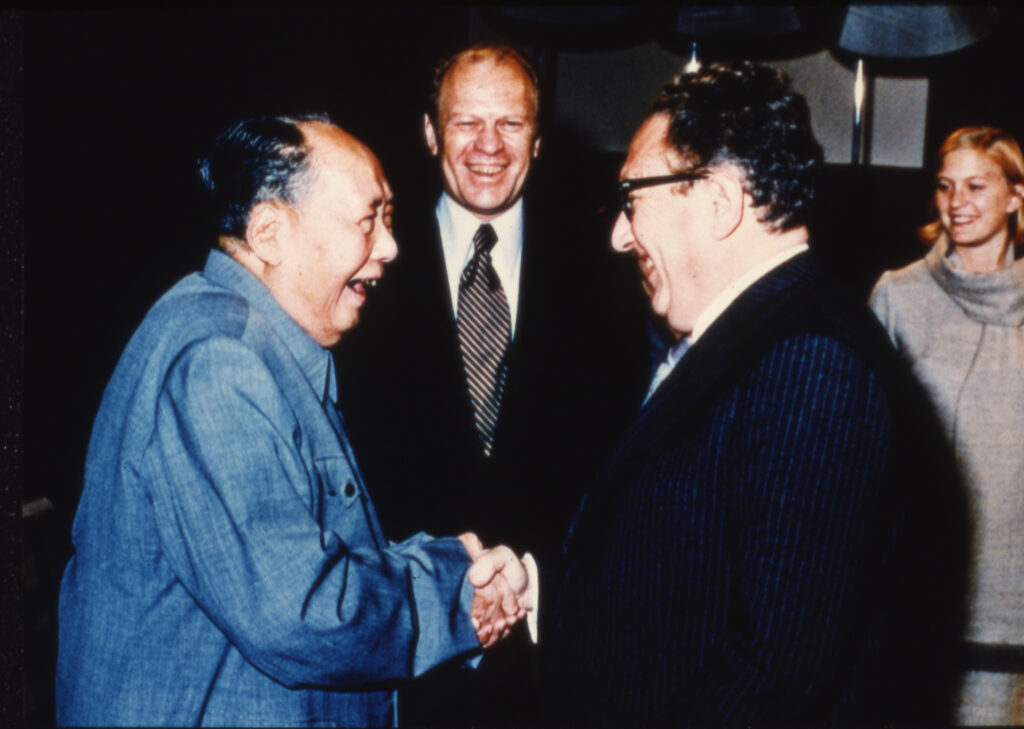
Mao Tse-Tung on December 2, 1975.
A7912 / NAID: 7062596
Courtesy Gerald R. Ford Presidential Library
At the time of their meeting, which focused on the Soviet Union, Chairman Mao was physically declining due to Parkinson’s disease. Even so, President Ford found that “Mao may have been weak; his hands may have been gnarled, but it was apparent that he was still mentally alert….”
Because the death of Chairman Mao could potentially cause political upheaval in China, the National Security Council and the State Department began preparations for Mao’s death in earnest in August 1976.
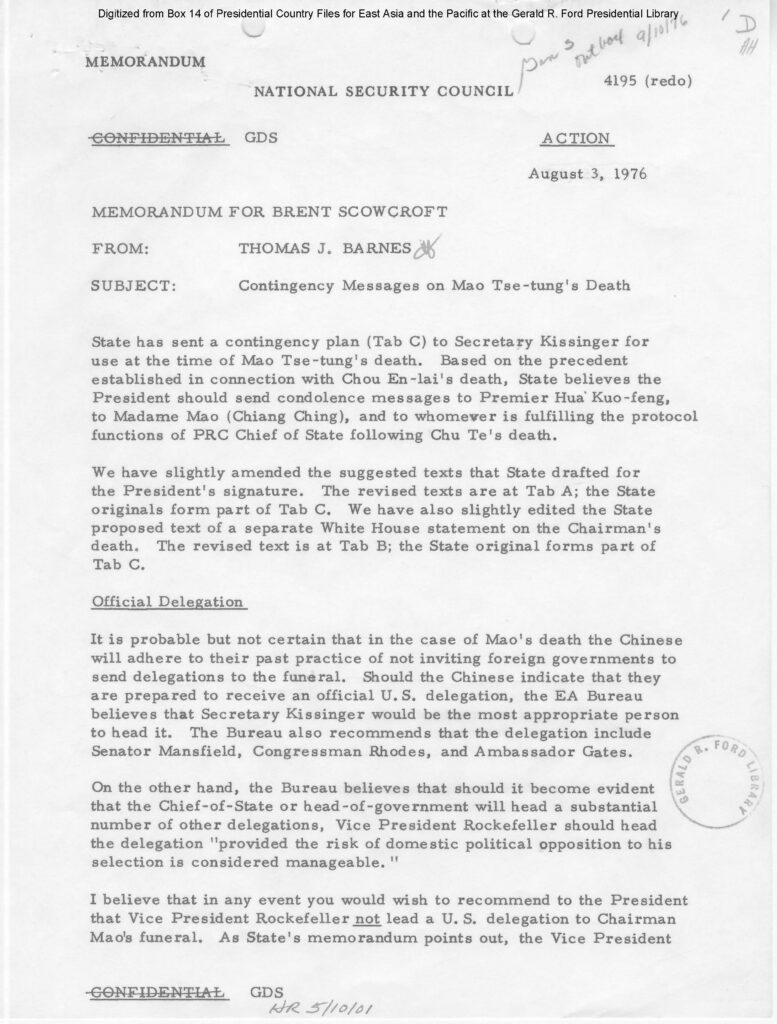
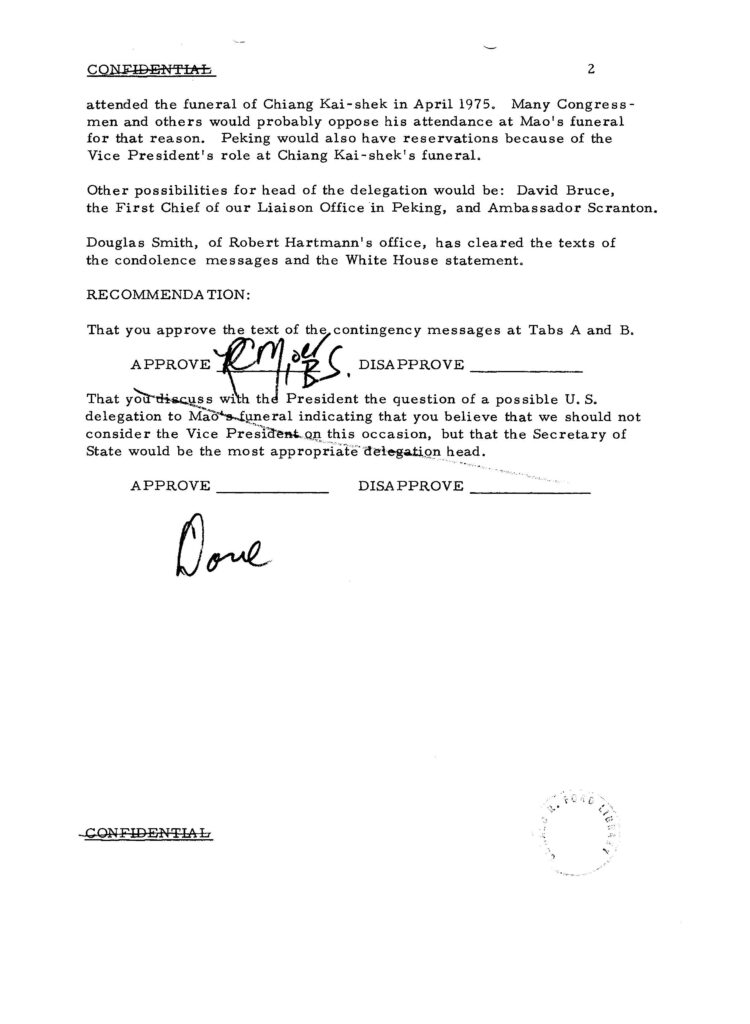
Box 14, “People’s Republic of China (15).”
NAID: 1553808
Courtesy Gerald R. Ford Presidential Library
Then on September 9, these cables were sent to the Director of the NSA and the Secretary of State, respectively.
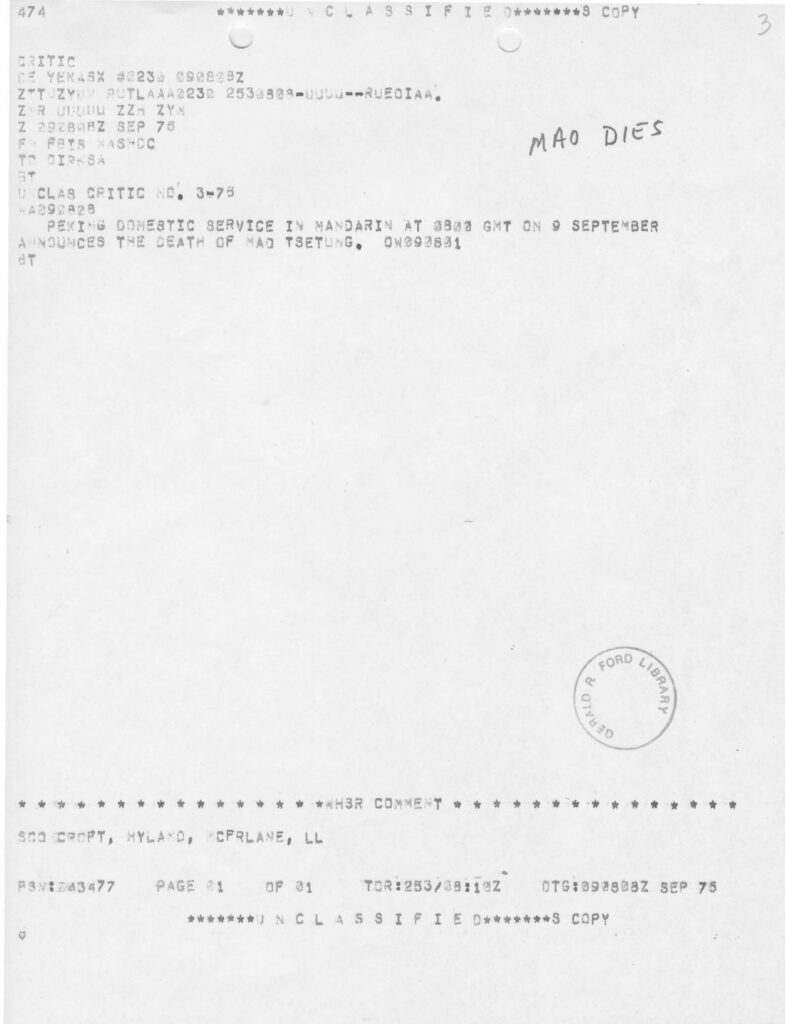
Courtesy Gerald R. Ford Presidential Library
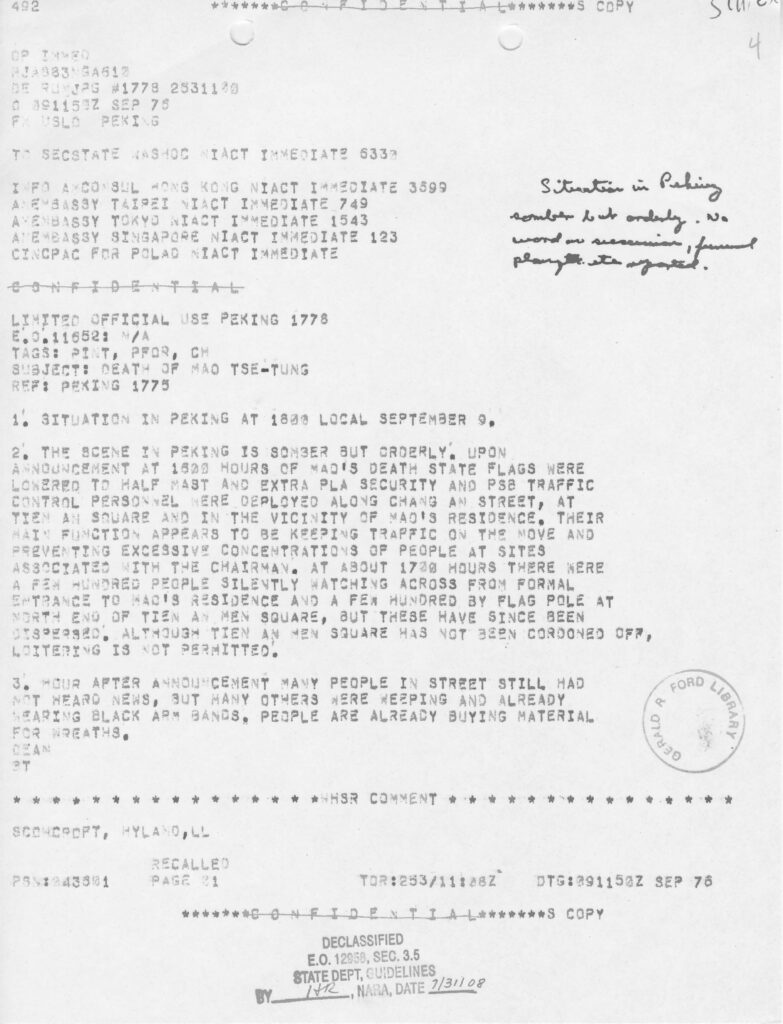
The Chairman’s death was international news, and the White House Press Office issued this press guidance regarding the Chairman’s death.
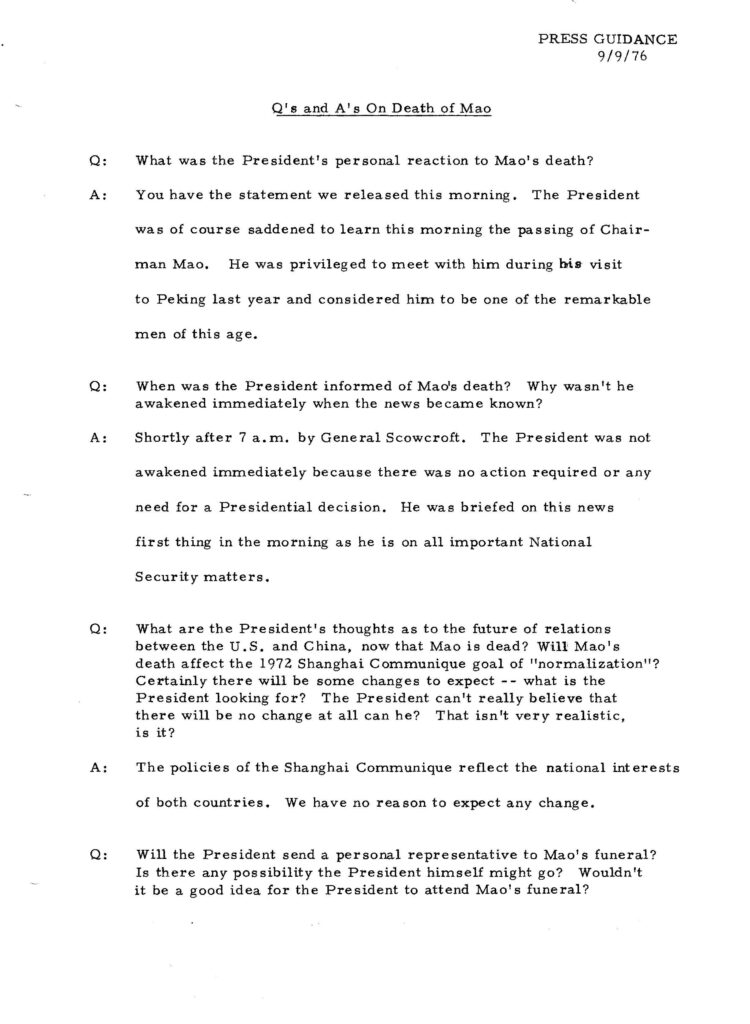
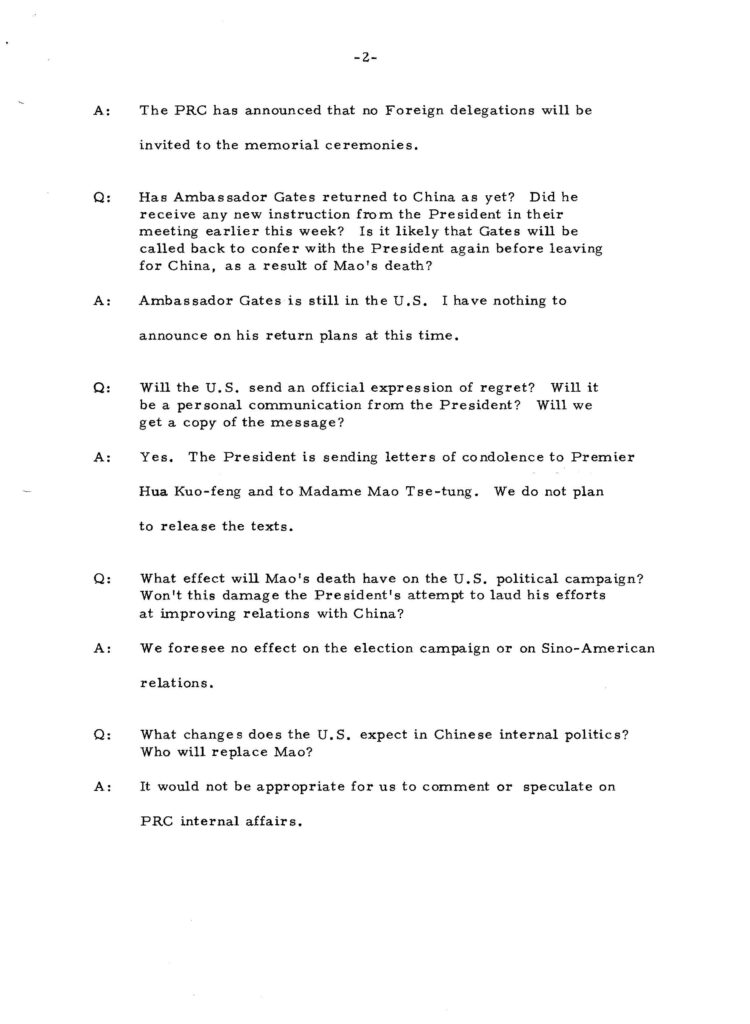
Courtesy Gerald R. Ford Presidential Library
That day, President Ford delivered this statement on the passing of the Chinese leader.
Although Chairman Mao’s legacy is complicated, fifty years ago President Ford memorialized him and worked to set a welcoming tone for the political transition of power in China.
- Ford, Gerald R. A Time to Heal: The Autobiography of Gerald R. Ford, 1979. p. 335. ↩︎
- A Time to Heal, p. 336. ↩︎
Authors: Brooke Clement and Dr. Richard Weld