
In photographs of Betty Ford, the flowing sleeves of her gowns and loose-fitting clothing seem to simply be a signature fashion choice typical of the era. But those relaxed styles are also representative of a long history of “healing clothes” that focus on comfort during illness and recovery. Traditionally, these clothes were worn behind closed doors of the home, while public appearance still favored restrictive clothing and formal hyper-femininity. Betty Ford helped transform this tradition. She made her recovery visible to the public, rejecting expectations of domestic seclusion during times of illness. Her clothing turned into more than a personal style, but a new era of openness about women’s health.
Image: Multicolor floral chiffon gown designed by Albert Capraro. 1982.33.1.
Courtesy Gerald R. Ford Presidential Library and Museum.
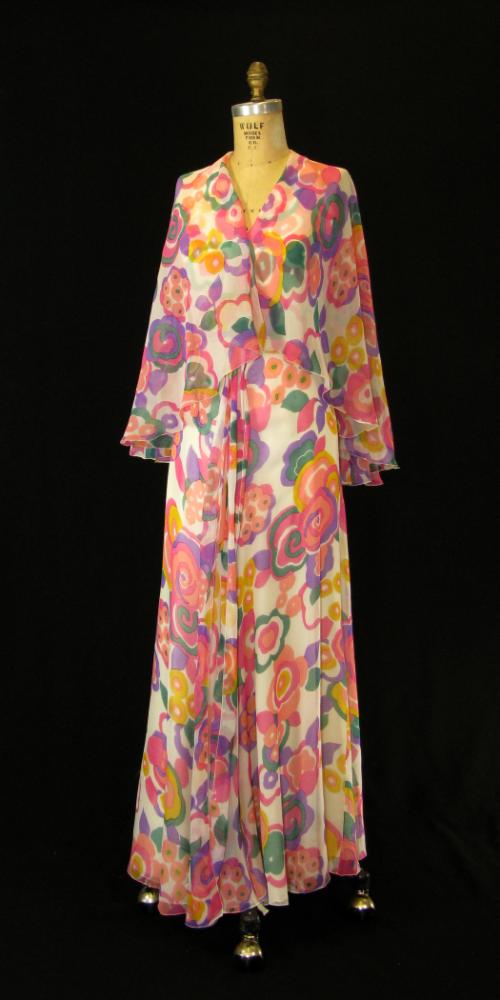
During the eighteenth and nineteenth centuries, the invalid dress, wrappers, dressing gowns, and tea gowns were the only relief from the boned corsets that dominated respectable dress. Invalid dresses and wrappers were loose-fitting garments used by women confined to bed, allowing movement and reducing the pressure on the body. The tea gown appeared in the Victorian era and was an alternative to restrictive corsets and fashionable dress, still predominantly worn in private. Social conventions reinforced that recovery of the female body belonged in the privacy of the home and not in the sphere of public life. Betty Ford emerged on the public stage at a moment when these expectations were starting to shift, and she used her own experience to advocate for change.
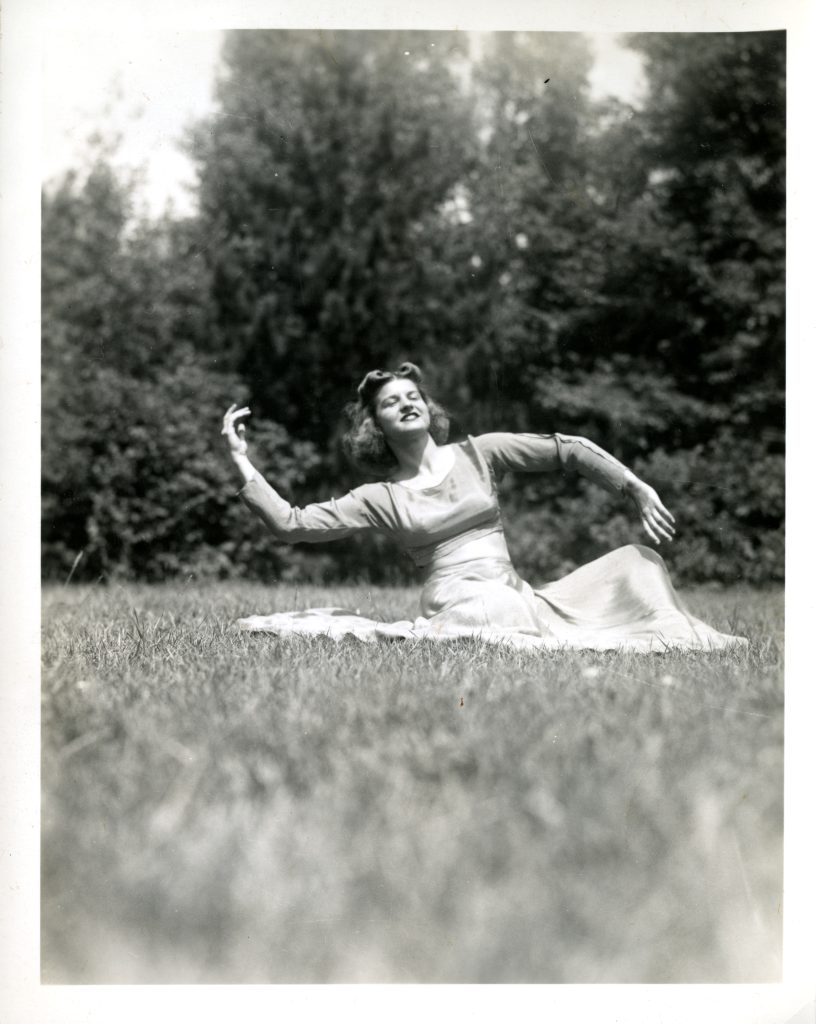
Betty’s early years formed her relationship with clothing. She trained in modern dance—and later on, modeling—which provided an opportunity to work between freedom of movement and discipline. This gave Betty an appreciation for the different functions that clothing could serve. These lessons would be invaluable as she and her husband stepped into the national political arena.
Image: Betty Bloomer dancing at Camp Bryn Afon in Rhinelander, Wisconsin, where she worked as a dance instructor. Circa 1940. 0424-D-611
Courtesy Gerald R. Ford Presidential Library and Museum
As wife to Congressman Ford, Betty’s wardrobe had reflected the polished, structured fashion trends expected of a political wife during the 1970s–skirt suits, fitted gowns, cinched waists, and coordinated ensembles that projected refinement. In 1974, the unexpected transition to life in the White House would require Betty to adapt, but an even greater change was soon to come. Six weeks into her husband’s administration, Betty Ford would undergo a radical mastectomy after being diagnosed with breast cancer. Her fight would not only alter her style, challenging what femininity looked like in the White House, but also the role of the First Lady.
After her mastectomy, Betty Ford adopted a style that replicated the qualities of Victorian-era healing clothes. Favoring caftans, loose tunics, and soft silhouettes, these garments offered physical comfort and practical accommodations following her surgery. But her confidence was not without uncertainty. She spoke to her husband about her concerns regarding not being able to wear low-cut dresses, and Gerald Ford’s response showed the partnership that he provided through changes and insecurity …
“If you can’t wear ’em cut low in the front, wear ’em cut low in the back.”
Illness was still expected to be a private experience, and First Ladies were defined by polished perfection, she presented herself to the public as unapologetically human. She was willing to let America see what recovery looked like, even going so far as to be photographed in her hospital gown after surgery. Betty’s wardrobe reflected acceptance of her changing body. The garments associated with sickness became symbols of resilience. Her public recovery helped redefine both the image of the First Lady and the national conversation surrounding women’s health.
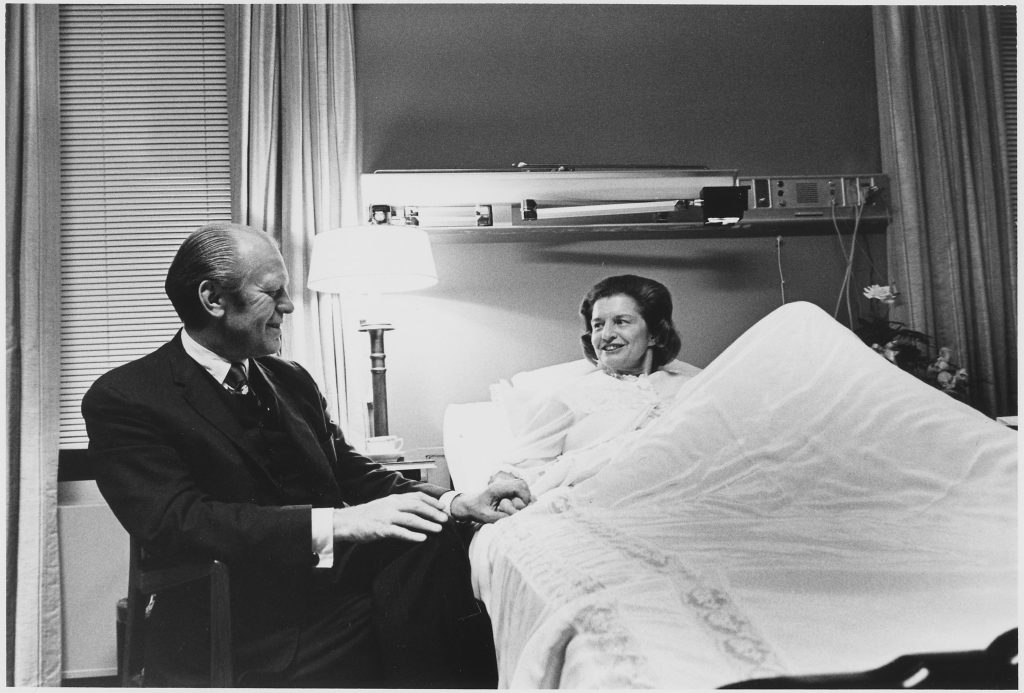
Image: On October 2, 1974, President Ford visited First Lady Betty Ford in the President’s Suite at Bethesda Naval Hospital following her breast cancer surgery. A1170-35 / NAID: 186774
Courtesy Gerald R. Ford Presidential Library and Museum
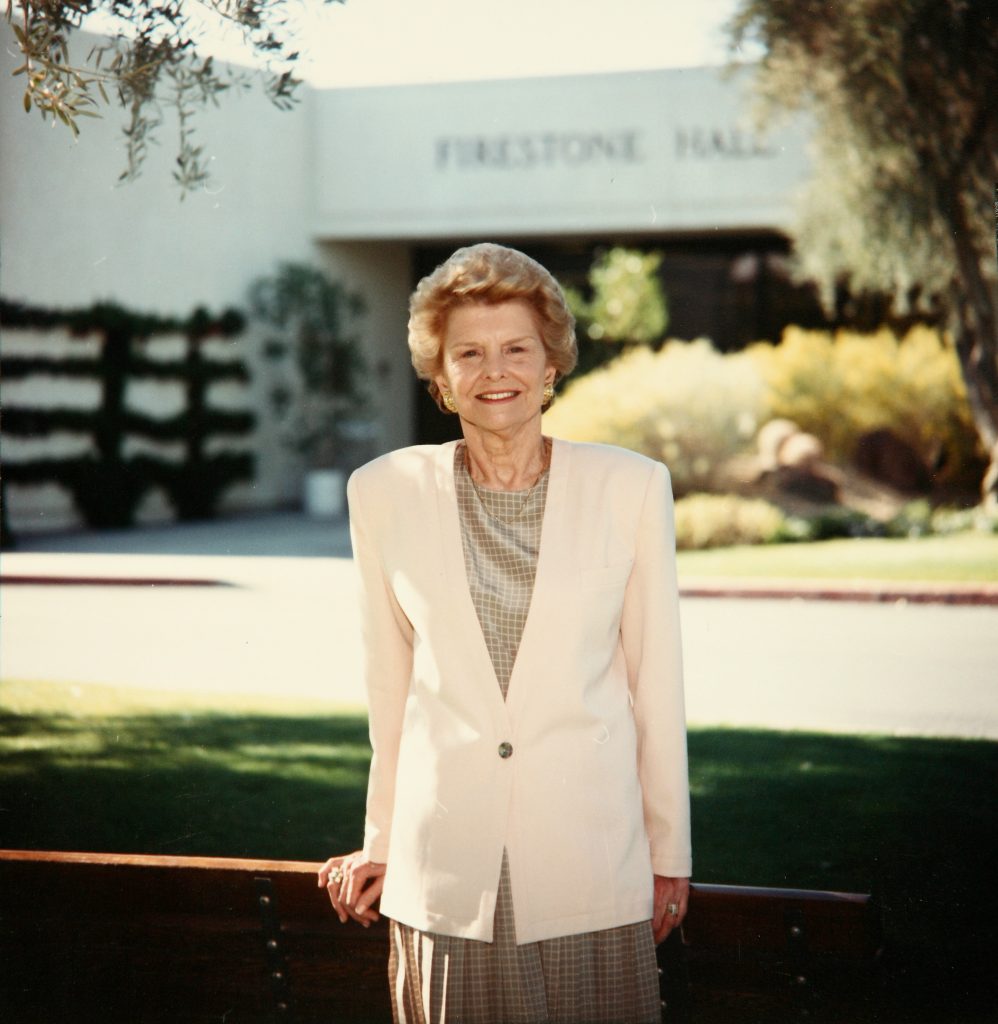
After leaving the White House in 1977, Betty’s style fluctuated with the realities of day-to-day life outside of the East Wing. Following her public struggle with addiction and treatment in 1978, Betty became one of the nation’s most influential advocates for recovery and to challenge the stigma surrounding substance use. In 1982, she co-founded the Betty Ford Center, and she championed treatment along with women’s health. Her wardrobe was approachable and polished while she managed an active schedule of travel and speaking engagements. From the White House to the recovery center, Betty Ford’s evolving style followed the path of her own transformation, a style designed for a woman who was no longer only representing an office but using her own experiences to create change.
Image: Betty Ford stands outside the Betty Ford Center, a treatment center for alcohol and drug dependency in Rancho Mirage, California, in 1990. She co-founded the facility in 1982.
Image courtesy of Betty Ford Center.
Betty Ford’s wardrobe followed her experiences and mirrored a wider cultural movement toward greater honesty surrounding women’s bodies, health, and private experiences. By allowing her own healing and struggles to be seen, Betty challenged generations of women to reject silence and seclusion, proving that conversations about illness and recovery were not signs of weakness but opportunities for empowerment.
Author: Maya Waddington, Intern
A very pleasant read!